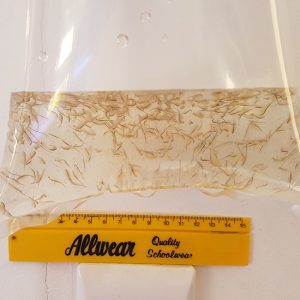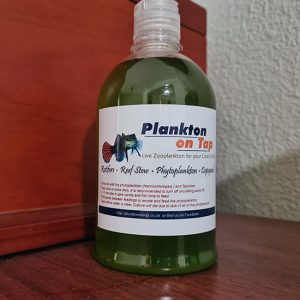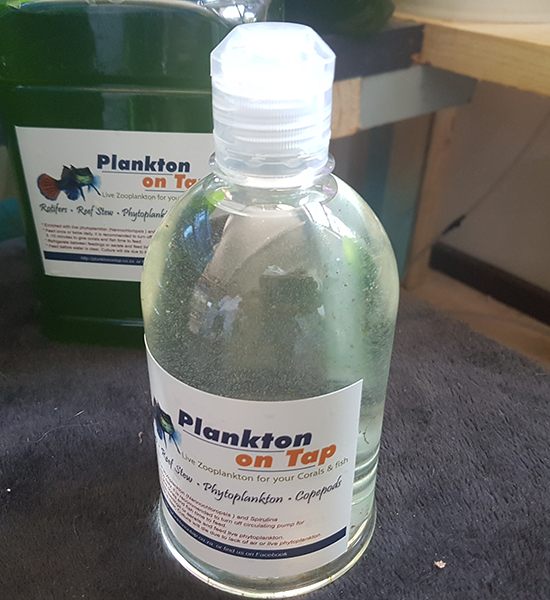
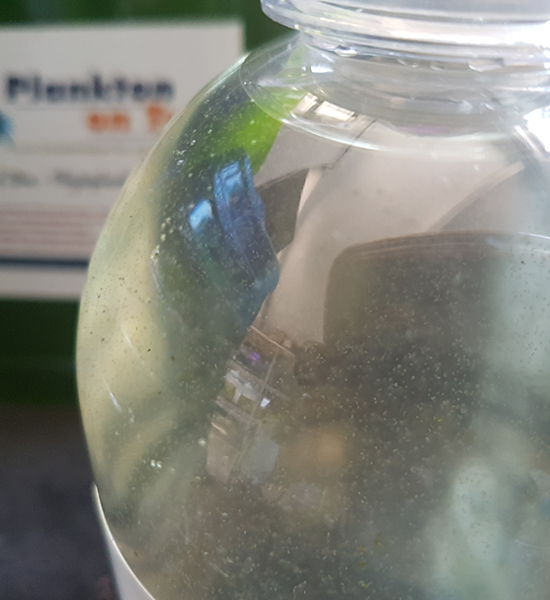
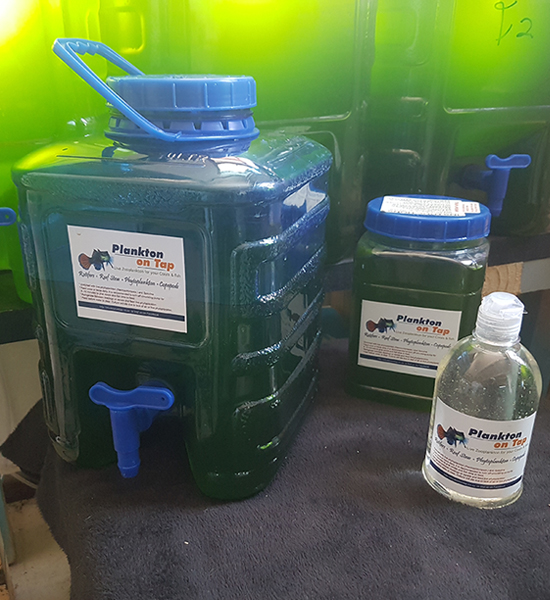
Two strains of rotifers are available offered to aquarists, the (S) strain which is Brachionus rotundiformis and the (L) strain Brachionus plicatilis. Both strains have been used as a first food for marine larvae although most hobbyists or professional clown fish breeders predominately use the L strain as this organism is still small enough to feed first stage larvae. Rotifers available from Plankton On Tap currently is the L strain.
As for Corals, Rotifers are the quintessential food source for them. The right rotifers can give your Coral a major boost in size and growth. Since they’re so rich in crude fat and protein, Rotifers are especially attractive to most corals.
Rotifers are slow moving and they disperse evenly throughout the water columns. They are the right size for most demersal species (i) and their reproduction rate is rapid. This ensures a high density of food organisms in the larval tank enabling slow moving larvae to maximise development without expending more energy than necessary. Rotifers under optimum conditions, such as a low salinity and adequate aeration, with a healthy food supply, will reproduce asexually. Female rotifers can have between four and seven daughters which will also reproduce at the same rate within a twenty-four-hour period. If conditions deteriorate resting cysts are produced which hatch when favourable conditions return; some of these cysts will contain fast moving males which restart the asexual process again.
Rotifers have no nutritional value themselves, it is the algae they consume that provides this, the rotifers are in effect the transporters of nutrients to the larvae. Rotifers will consume any algal species however it has been recognised that Nannochloropsis provides the optimum nutritional profile. Nannochloropsis (the main ingredient in easy reef’s products) has the maximum benefit because this small species of alga, 2 μm (microns), is high in unsaturated fatty acids (HUFA) and has a cell wall that resists bacterial breakdown.
On the other hand, feeding rotifers on yeast will maintain a culture but will provide no nutritional value to the rotifers and can easily pollute a culture which in turn elevates levels of bacteria and ammonia. The alternative and by far the most convenient method is to get Rotifers from us on a On Tap Basis as it is needed.